

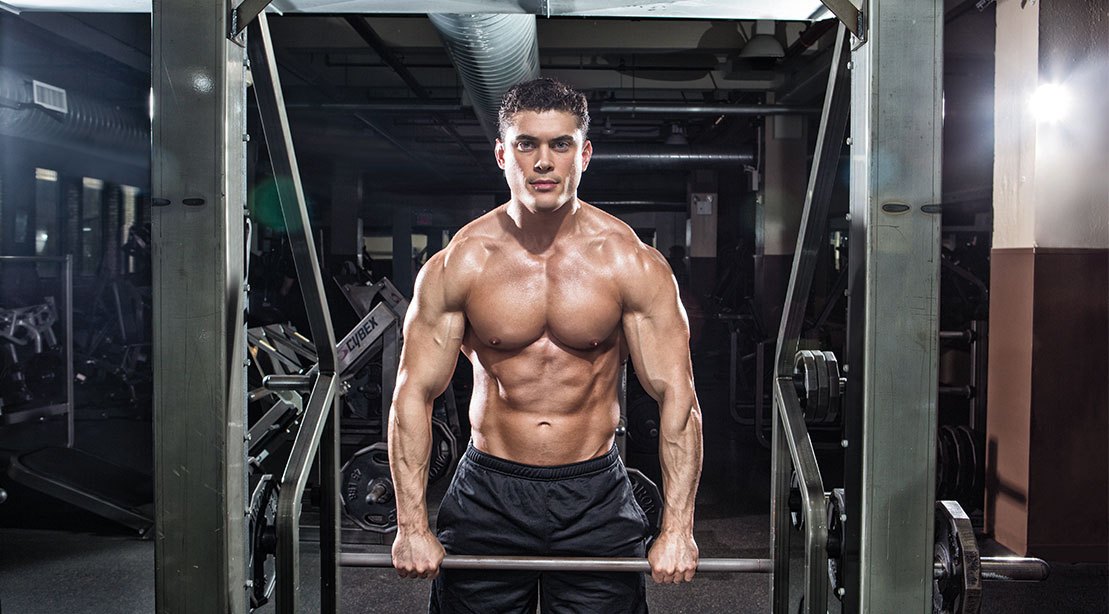
Chest training relies on movements that stimulate the pectoralis major, pectoralis minor, and surrounding stabilizers through pressing, flying, and dipping actions, each contributing differently to size and shape.
Flat Barbell Bench Press
The flat barbell bench press remains a primary movement for chest development, targeting the middle portion of the pectoral muscles while also engaging the triceps and anterior shoulders, requiring a stable grip, controlled bar path, and full range of motion from chest to lockout for maximum muscle recruitment.
This exercise allows heavier loading compared to other pressing variations, making it valuable for building overall chest thickness, and performing it early in a workout when energy levels are highest ensures proper form and reduces injury risk during heavier lifting sessions.
Incline Dumbbell Press
The incline dumbbell press shifts emphasis toward the upper chest fibers, an area often underdeveloped in lifters who focus only on flat pressing movements, and using dumbbells instead of a barbell allows each side of the body to work independently, correcting strength imbalances naturally.
Setting the bench angle between thirty and forty five degrees targets the clavicular head of the pectoralis major effectively, and maintaining a controlled descent with elbows at a moderate angle protects the shoulder joint while maximizing tension on the upper chest muscle fibers.
Decline Barbell Press
The decline barbell press isolates the lower chest region, contributing to a fuller, more defined look near the bottom of the pectoral muscles, and the decreased range of motion compared to flat pressing often allows lifters to handle slightly heavier loads safely.
This variation reduces shoulder strain for many lifters since the pressing angle aligns more naturally with the lower chest fibers, and including it periodically within a training week helps create balanced development across the entire chest rather than favoring only the upper portion.
Chest Dips
Chest dips use bodyweight resistance to build both size and strength in the lower and outer chest muscles, requiring a forward lean with elbows flared slightly outward to shift emphasis away from the triceps and onto the pectoral muscles more directly.
Adding external weight through a dip belt allows progressive overload once bodyweight repetitions become manageable, and controlling the descent slowly increases muscular tension throughout the movement, making dips one of the most effective bodyweight options for chest hypertrophy.
Cable Crossover
The cable crossover provides constant tension throughout the entire range of motion, unlike free weight pressing movements where tension decreases near the top, making it highly effective for chest definition and muscle separation near the sternum.
Adjusting the pulley height allows targeting of upper, middle, or lower chest fibers depending on the angle of the cables, and finishing a workout with crossovers helps fully fatigue the chest muscles after heavier compound pressing exercises earlier in the session.
Pec Deck Machine
The pec deck machine isolates the chest muscles without requiring stabilization from the shoulders or triceps, allowing lifters to focus entirely on contracting the pectoral fibers through a controlled, fixed range of motion that reduces injury risk for beginners.
This machine works well for achieving a strong mind muscle connection since the resistance path is guided, and squeezing the chest muscles firmly at the peak contraction point enhances muscle fiber recruitment and contributes to noticeable definition over consistent training cycles.
Push Ups
Push ups remain one of the most accessible chest exercises, requiring no equipment while still effectively targeting the pectoral muscles, shoulders, and triceps through a natural pressing movement that can be modified for different fitness levels and training goals.
Adjusting hand placement wider or narrower shifts emphasis between the chest and triceps respectively, and elevating the feet increases difficulty by adding more bodyweight resistance to the upper chest region, making push ups a versatile tool for continued progression.
Incline Cable Fly
The incline cable fly targets the upper chest through a sweeping motion that stretches and contracts the pectoral fibers without involving heavy pressing mechanics, making it useful for refining muscle shape after compound movements have already built overall size.
Keeping a slight bend in the elbows throughout the movement protects the shoulder joint while maintaining tension on the chest muscles, and controlling the stretch phase slowly increases time under tension, which supports continued muscle definition and fiber development.
Smith Machine Bench Press
The smith machine bench press offers a fixed bar path, allowing lifters to focus on pressing power without needing to stabilize the bar through free movement, making it a useful option for those recovering from minor shoulder discomfort or beginners learning pressing mechanics.
This machine allows safe solo training since the bar can be locked at any point during the lift, and adjusting bench angle underneath the machine allows targeting of upper, middle, or lower chest fibers similarly to free weight variations.
Dumbbell Pullover
The dumbbell pullover stretches the chest and surrounding rib cage muscles through an overhead arcing motion, contributing to chest expansion and improved flexibility while also engaging the lats and serratus anterior during the pulling phase of the movement.
Using a moderate weight with a slow, controlled tempo maximizes the stretch on the chest muscles without risking shoulder strain, and including this exercise occasionally helps improve overall upper body mobility alongside its contribution to chest muscle development.
Weighted Push Ups
Weighted push ups increase resistance beyond bodyweight alone, allowing continued strength and size gains once standard push ups become too easy, and placing a weight plate across the upper back challenges the chest muscles through a familiar, functional pressing pattern.
This variation supports progressive overload without requiring a bench or barbell setup, making it practical for home training environments, and combining weighted push ups with other pressing exercises throughout the week ensures continued chest muscle stimulation and definition.
Combining pressing movements with fly variations and bodyweight exercises across a training week ensures complete chest development, addressing the upper, middle, and lower regions through varied angles and resistance types, ultimately supporting both muscular growth and visible definition over time.
