


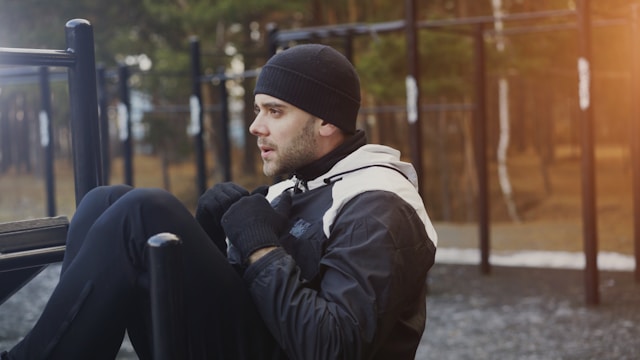
Bodyweight exercises that build strength are compound movements that use your own body weight as resistance to increase muscular strength, stability, and control, unlike isolation exercises, they train multiple muscle groups at once and can be made progressively harder through advanced variations, slower tempos, or increased training volume.
The most effective bodyweight strength exercises include push-ups, pull-ups, dips, squats, lunges, and handstand variations because they challenge the major muscle groups through natural movement patterns. When performed consistently with progressive overload, these exercises can increase strength, improve functional fitness, and build muscle without requiring gym equipment.
This guide covers 15 of the best bodyweight exercises for building strength, explains the muscles each exercise targets, and provides progression tips to help you continue getting stronger regardless of your fitness level.
What Are the Best Bodyweight Exercises for Strength?
The best bodyweight exercises for strength are:
- Push-Ups
- Pull-Ups
- Chin-Ups
- Bodyweight Squats
- Bulgarian Split Squats
- Pistol Squats
- Dips
- Pike Push-Ups
- Handstand Push-Ups
- Glute Bridges
- Nordic Hamstring Curls
- Walking Lunges
- Inverted Rows
- Hollow Body Holds
- Planks
These exercises train major muscle groups and can be made more challenging through advanced variations, slower tempos, increased repetitions, or added resistance.
1. Push-Ups
Push-ups are one of the most effective upper-body bodyweight exercises. They primarily target the chest, shoulders, and triceps while engaging the core for stability.
Benefits
- Builds pressing strength
- Improves core stability
- Requires no equipment
- Offers many progression options
Progression
Start with incline push-ups if needed. As strength improves, progress to standard, diamond, decline, and archer push-ups.
2. Pull-Ups
Pull-ups are among the best bodyweight exercises for upper-body strength. They heavily recruit the back, biceps, shoulders, and forearms.
Benefits
- Develops pulling strength
- Builds upper-back muscles
- Improves grip strength
- Transfers well to athletic performance
Progression
Use resistance bands for assistance or perform negative pull-ups until you can complete full repetitions.
3. Chin-Ups
Chin-ups use an underhand grip, placing greater emphasis on the biceps while still training the back.
Benefits
- Builds arm strength
- Strengthens the lats
- Improves grip endurance
- Easier for many beginners than pull-ups
Progression
Increase repetitions gradually before moving to advanced variations.
4. Bodyweight Squats
Bodyweight squats are a foundational lower-body movement that targets the quadriceps, glutes, hamstrings, and core.
Benefits
- Strengthens the lower body
- Improves mobility
- Enhances balance
- Suitable for all fitness levels
Progression
Slow down the lowering phase or increase repetitions to create more challenge.
5. Bulgarian Split Squats
Bulgarian split squats train one leg at a time, increasing muscular demand and balance requirements.
Benefits
- Improves single-leg strength
- Corrects muscle imbalances
- Builds glutes and quads
- Enhances stability
Progression
Increase range of motion or perform slower repetitions.
6. Pistol Squats
Pistol squats are advanced single-leg squats that require strength, mobility, and balance.
Benefits
- Builds exceptional leg strength
- Improves coordination
- Challenges the core
- Enhances mobility
Progression
Use support from a wall or perform box pistol squats before attempting full repetitions.
7. Dips
Dips are one of the most effective bodyweight exercises for building upper-body pressing strength.
Benefits
- Targets chest and triceps
- Develops shoulder stability
- Increases pushing power
- Provides excellent strength carryover
Progression
Begin with assisted dips if necessary before progressing to full bodyweight repetitions.
8. Pike Push-Ups
Pike push-ups shift more of the workload onto the shoulders compared to standard push-ups.
Benefits
- Builds shoulder strength
- Prepares for handstand push-ups
- Strengthens the upper chest
- Requires minimal space
Progression
Elevate the feet to increase resistance.
9. Handstand Push-Ups
Handstand push-ups are one of the most advanced bodyweight strength exercises.
Benefits
- Builds overhead pressing strength
- Develops shoulders and triceps
- Improves body control
- Challenges balance and coordination
Progression
Start with wall-supported handstand holds and partial repetitions.
10. Glute Bridges
Glute bridges strengthen the posterior chain, especially the glutes and hamstrings.
Benefits
- Improves hip strength
- Supports lower-back health
- Enhances athletic performance
- Suitable for beginners
Progression
Move to single-leg glute bridges as strength improves.
11. Nordic Hamstring Curls
Nordic hamstring curls are one of the most challenging bodyweight exercises for the hamstrings.
Benefits
- Builds hamstring strength
- Improves knee stability
- Reduces injury risk
- Enhances sprinting performance
Progression
Use your hands to assist during the lowering phase until you become stronger.
12. Walking Lunges
Walking lunges train the legs while challenging balance and coordination.
Benefits
- Builds unilateral leg strength
- Improves stability
- Strengthens glutes and quads
- Enhances functional movement
Progression
Increase distance or use slower repetitions.
13. Inverted Rows
Inverted rows provide an excellent horizontal pulling movement that complements pull-ups.
Benefits
- Strengthens the upper back
- Improves posture
- Builds arm strength
- Suitable for various fitness levels
Progression
Lower the body position to increase difficulty.
14. Hollow Body Holds
Hollow body holds are widely used in gymnastics for developing core strength and body control.
Benefits
- Strengthens the core
- Improves posture
- Enhances stability
- Supports advanced bodyweight skills
Progression
Increase hold duration gradually.
15. Planks
Planks remain one of the most effective bodyweight exercises for building core endurance and stability.
Benefits
- Strengthens the entire core
- Supports spinal health
- Improves balance
- Enhances athletic performance
Progression
Try side planks, plank reaches, or extended-duration holds.
Sample Full-Body Bodyweight Strength Workout
If you’re unsure how to combine these exercises, try the following routine:
- Push-Ups: 3 sets of 8–15 reps
- Pull-Ups: 3 sets of 5–10 reps
- Bulgarian Split Squats: 3 sets of 8–12 reps per leg
- Dips: 3 sets of 6–12 reps
- Inverted Rows: 3 sets of 8–12 reps
- Glute Bridges: 3 sets of 12–15 reps
- Plank: 3 sets of 30–60 seconds
Perform this workout two to four times per week while allowing adequate recovery between sessions.
Can You Build Muscle and Strength With Bodyweight Exercises?
Yes. Bodyweight exercises can build both muscle and strength when performed with sufficient intensity and progressive overload. Increasing repetitions, slowing the tempo, using harder variations, and improving range of motion can all make bodyweight training more effective.
Advanced bodyweight athletes often develop impressive levels of strength using movements such as pull-ups, handstand push-ups, pistol squats, and dips.
Frequently Asked Questions
What is the best bodyweight exercise for overall strength?
Pull-ups are often considered one of the best bodyweight exercises for overall strength because they develop the back, arms, shoulders, and grip simultaneously.
Can bodyweight exercises replace weight training?
Bodyweight exercises can build significant strength and muscle, especially for beginners and intermediate trainees. However, advanced athletes may eventually benefit from external resistance for continued progression.
How often should I do bodyweight strength training?
Most people achieve good results with two to four strength-focused bodyweight workouts per week.
Do bodyweight exercises build muscle?
Yes. When exercises are challenging enough and performed consistently, bodyweight training can stimulate muscle growth and strength gains.
The best bodyweight exercises for strength are those that challenge multiple muscle groups and allow progressive overload over time. Push-ups, pull-ups, squats, dips, lunges, and handstand variations can all help build real-world strength without a gym.
By focusing on proper technique, gradually increasing difficulty, and training consistently, you can develop impressive strength using nothing more than your own body weight.
Albert Mckennie is a strength and conditioning coach, author, and speaker with experience training athletes and general fitness clients.