

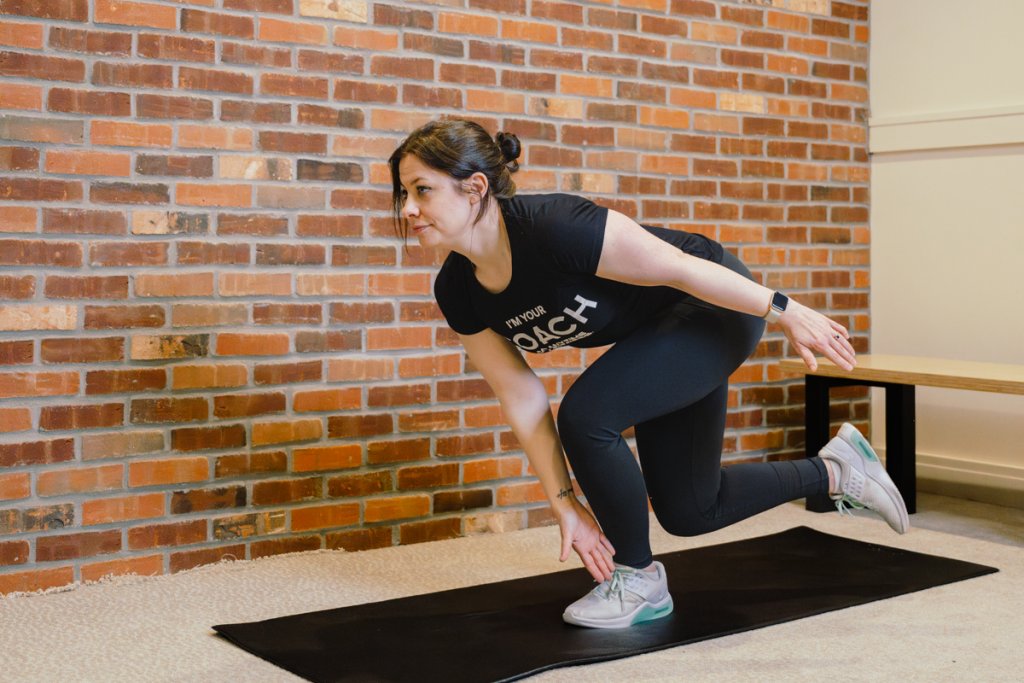
Training the lower body requires exercises that target the quadriceps, hamstrings, glutes, calves, and stabilizing muscles from multiple angles using compound lifts, unilateral movements and isolation, each contributing to strength, muscle growth, and improved athletic performance over time.
1. Barbell Back Squat
The back squat loads the barbell across the upper trapezius, requiring the lifter to bend the knees and hips while keeping the torso upright, activating the quadriceps, glutes, hamstrings, and core, making it one of the most complete strength builders for the lower body.
2. Front Squat
The front squat positions the barbell across the front deltoids and clavicles, shifting the load forward, which increases quadriceps activation while demanding greater core stability and thoracic mobility, making it a valuable variation for athletes seeking balanced knee and hip development.
3. Romanian Deadlift
The Romanian deadlift begins from a standing position, with the lifter hinging at the hips while keeping the knees softly bent, lowering the barbell along the thighs, targeting the hamstrings and glutes intensely, while also reinforcing posterior chain control and hip hinge mechanics.
4. Conventional Deadlift
The conventional deadlift starts from the floor, requiring the lifter to drive through the heels while extending the hips and knees together, engaging the hamstrings, glutes, quadriceps, and lower back, delivering total posterior chain strength alongside grip and core stability benefits.
5. Walking Lunge
The walking lunge involves stepping forward into a lunge position, lowering the back knee toward the floor, then driving through the front heel to stand and step forward again, building unilateral quadriceps and glute strength while improving balance and hip stability.
6. Bulgarian Split Squat
The Bulgarian split squat places the rear foot elevated on a bench, while the front leg performs a squatting motion, isolating one leg at a time, intensifying quadriceps and glute engagement, while exposing and correcting strength imbalances between the left and right leg.
7. Leg Press
The leg press uses a machine that allows the lifter to push a weighted platform away using the legs while seated or reclined, targeting the quadriceps, glutes, and hamstrings, offering a safer alternative for those seeking heavy loading without spinal compression concerns.
8. Hack Squat
The hack squat machine guides the body along a fixed angled path, requiring the lifter to bend the knees while the back stays supported against a pad, emphasizing the quadriceps intensely, while reducing the stabilization demand compared to free weight squatting movements.
9. Step Up
The step up requires the lifter to place one foot on an elevated platform, then drive through that foot to lift the entire body upward, working the quadriceps and glutes unilaterally, while also improving hip stability and single leg coordination for daily movement.
10. Goblet Squat
The goblet squat has the lifter hold a dumbbell or kettlebell close to the chest while performing a squat, encouraging an upright torso position, building quadriceps and glute strength, while serving as an accessible entry movement for beginners learning proper squat form.
11. Hip Thrust
The hip thrust positions the upper back against a bench, with a barbell resting across the hips, requiring the lifter to drive the hips upward through full extension, isolating the glutes directly, making it one of the strongest glute building exercises available.
12. Glute Bridge
The glute bridge is performed lying on the back with knees bent and feet flat, lifting the hips upward while squeezing the glutes at the top, offering a simpler bodyweight alternative to the hip thrust, suitable for warmups, activation work, or rehabilitation programs.
13. Nordic Hamstring Curl
The Nordic hamstring curl requires the lifter to kneel with the ankles secured, then lower the torso forward slowly while resisting with the hamstrings, building eccentric hamstring strength, which research links to reduced hamstring strain injuries among athletes in sprinting and cutting sports.
14. Lying Leg Curl
The lying leg curl uses a machine where the lifter lies face down, curling a padded lever upward using the back of the legs, isolating the hamstrings directly, allowing targeted hypertrophy work without involvement from the quadriceps or glutes during the movement.
15. Leg Extension
The leg extension machine has the lifter seated, extending the knees against resistance to lift a padded lever, isolating the quadriceps directly, making it a useful accessory exercise for building quadriceps size or rehabilitating the knee after certain injuries or surgeries.
16. Standing Calf Raise
The standing calf raise requires the lifter to rise onto the toes against resistance, whether using a machine, barbell, or dumbbells, targeting the gastrocnemius muscle of the calf, building lower leg size and strength important for running, jumping, and ankle stability.
17. Seated Calf Raise
The seated calf raise positions the knees bent at ninety degrees while the lifter raises the heels against a padded lever, shifting emphasis toward the soleus muscle beneath the gastrocnemius, complementing standing calf work for complete lower leg muscle development.
18. Sumo Squat
The sumo squat uses a wide stance with the toes pointed outward, requiring the lifter to squat down while holding a dumbbell or kettlebell between the legs, emphasizing the inner thigh adductors and glutes, offering variety in hip angle compared to traditional squatting.
Combining these eighteen exercises across a training week allows for complete coverage of the quadriceps, hamstrings, glutes, adductors, and calves, using compound lifts for overall strength, unilateral movements for balance, and isolation exercises for targeted muscle growth throughout the lower body.
