

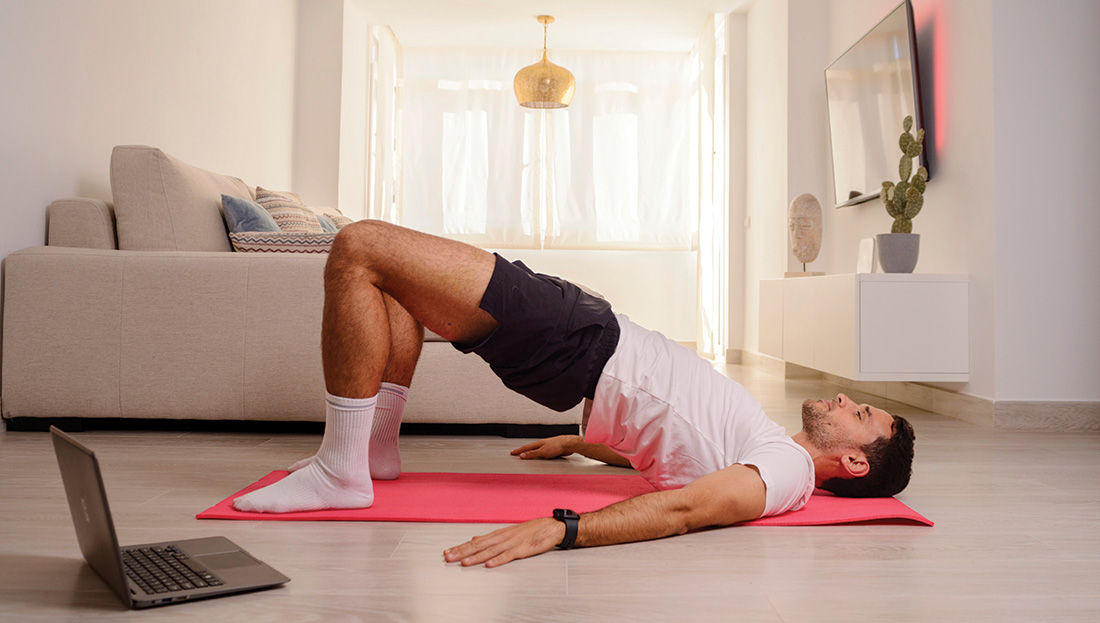

Strength is often associated with lifting heavier weights but mobility plays an equally important role, strong muscles cannot perform at their best if joints cannot move efficiently, limited mobility forces the body to compensate with poor mechanics, reducing power and increasing injury risk.
What Is Mobility?
Mobility is your ability to actively move a joint through its full range of motion while maintaining control and stability.
Unlike flexibility, which refers to how far a muscle can stretch, mobility combines:
- Joint movement
- Muscle flexibility
- Stability
- Balance
- Coordination
- Neuromuscular control
Good mobility allows you to perform exercises with proper technique while producing maximum force.
Does Mobility Improve Strength?
Yes. Research consistently shows that adequate mobility supports better strength performance by allowing muscles to work through complete movement patterns.
Benefits include:
- Greater force production
- Better squat and deadlift depth
- Improved overhead pressing mechanics
- Increased lifting efficiency
- Better muscle activation
- Reduced compensations during exercise
- Lower risk of movement-related injuries
While mobility alone won’t build muscle, it creates the foundation for more effective strength training.
Best Mobility Exercises That Improve Strength
1. World’s Greatest Stretch
This full-body mobility drill targets the hips, hamstrings, thoracic spine, and shoulders.
How to perform:
- Step into a deep lunge.
- Place both hands inside the front foot.
- Rotate your upper body toward the front leg.
- Reach one arm toward the ceiling.
- Return and repeat.
Benefits:
- Improves hip mobility
- Increases thoracic rotation
- Enhances squat and deadlift positioning
Perform 5–8 repetitions per side.
2. Deep Squat Hold
Holding the bottom position of a squat develops ankle, hip, and knee mobility.
How to perform:
- Stand with feet shoulder-width apart.
- Lower into the deepest squat possible.
- Keep heels on the floor.
- Maintain an upright chest.
- Hold for 30–60 seconds.
Benefits:
- Better squat depth
- Improved hip flexibility
- Increased ankle mobility
3. Hip 90/90 Rotation
The 90/90 stretch develops internal and external hip rotation.
How to perform:
- Sit with both knees bent at 90 degrees.
- Rotate both legs from one side to the other.
- Keep your chest tall.
- Move slowly and under control.
Benefits:
- Better hip rotation
- Improved lower-body movement
- Increased squat stability
Perform 8–10 repetitions.
4. Thoracic Spine Rotations
Upper-back mobility is essential for pressing, rowing, and overhead lifting.
How to perform:
- Start on all fours.
- Place one hand behind your head.
- Rotate your elbow toward the ceiling.
- Return slowly.
Benefits:
- Improves shoulder mechanics
- Enhances overhead range
- Reduces lower-back compensation
Perform 10 repetitions per side.
5. Ankle Dorsiflexion Stretch
Limited ankle mobility is a common cause of poor squat mechanics.
How to perform:
- Stand facing a wall.
- Keep your heel flat.
- Drive your knee toward the wall.
- Hold briefly before returning.
Benefits:
- Better squat depth
- Improved balance
- Stronger lower-body mechanics
Perform 10–15 repetitions per ankle.
6. Shoulder Pass-Throughs
Use a resistance band or PVC pipe.
How to perform:
- Hold the band with a wide grip.
- Raise it overhead.
- Continue behind your body.
- Reverse the movement.
Benefits:
- Improves shoulder mobility
- Better overhead press positioning
- Reduces shoulder stiffness
Perform 10–15 repetitions.
7. Cat-Cow Stretch
This exercise improves spinal mobility.
How to perform:
- Begin on hands and knees.
- Arch your back upward.
- Slowly reverse into extension.
- Move smoothly between positions.
Benefits:
- Improves spinal movement
- Enhances core control
- Prepares the body for lifting
Repeat for 10–15 repetitions.
8. Cossack Squat
The Cossack squat develops hip, groin, and ankle mobility while building strength.
How to perform:
- Take a wide stance.
- Shift your weight to one side.
- Squat deeply onto one leg.
- Keep the opposite leg straight.
- Alternate sides.
Benefits:
- Increases hip mobility
- Improves lateral strength
- Enhances athletic performance
Perform 6–10 repetitions per side.
9. Couch Stretch
Tight hip flexors often reduce squat and deadlift performance.
How to perform:
- Place one knee against a wall or bench.
- Position the other foot in front.
- Keep your torso upright.
- Hold the stretch.
Benefits:
- Improves hip extension
- Better posture
- Increased lower-body mobility
Hold for 30–60 seconds per side.
10. Shoulder Wall Slides
Wall slides improve shoulder control and upper-back mobility.
How to perform:
- Stand against a wall.
- Keep arms bent at 90 degrees.
- Slide arms overhead.
- Return slowly.
Benefits:
- Better overhead movement
- Improved posture
- Enhanced shoulder stability
Perform 10–12 repetitions.
Sample Mobility Routine Before Strength Training
Try this 10-minute routine before lifting:
- World’s Greatest Stretch — 5 reps each side
- Deep Squat Hold — 45 seconds
- Hip 90/90 Rotations — 8 reps each side
- Thoracic Rotations — 10 reps each side
- Ankle Mobility Stretch — 10 reps each ankle
- Shoulder Pass-Throughs — 15 reps
- Cat-Cow — 10 repetitions
This routine prepares the major joints involved in most strength exercises.
Should You Do Mobility Every Day?
Yes. Daily mobility work is safe for most healthy adults and often leads to better long-term movement quality.
You don’t need long sessions. Even 5 to 10 minutes per day can improve joint function over time.
Many athletes perform mobility:
- Before workouts
- After training
- During recovery days
- After long periods of sitting
Consistency matters more than duration.
Common Mobility Mistakes
Avoid these common errors:
- Moving too quickly through exercises
- Ignoring controlled breathing
- Skipping restricted joints
- Forcing painful positions
- Only stretching without strengthening new ranges
- Doing mobility only when feeling stiff
Controlled, consistent movement produces better results than aggressive stretching.
Frequently Asked Questions
What mobility exercises are best for strength?
The best mobility exercises include the World’s Greatest Stretch, deep squat holds, hip 90/90 rotations, thoracic rotations, ankle mobility drills, shoulder pass-throughs, Cossack squats, and wall slides because they improve movement patterns used in strength training.
Can mobility increase lifting performance?
Yes. Better mobility allows improved technique, deeper ranges of motion, and more efficient force production, which can enhance performance in exercises like squats, deadlifts, bench presses, and overhead presses.
How often should I do mobility exercises?
Aim for 5–10 minutes daily or include mobility work before every strength workout. Regular practice is more effective than occasional long sessions.
Is mobility better than stretching?
Mobility and stretching serve different purposes. Stretching primarily improves muscle flexibility, while mobility develops active control, stability, and joint movement. A balanced training program benefits from both.
Can beginners benefit from mobility training?
Absolutely. Beginners often experience faster improvements in exercise technique, posture, balance, and movement quality when mobility exercises are included alongside strength training.