

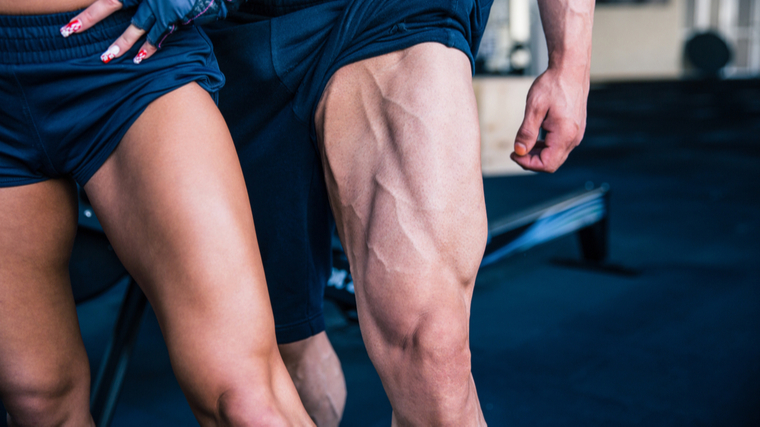
The following ten exercises target the quadriceps, hamstrings, glutes, and calves through proven, research-backed training methods used by strength coaches and physical therapists worldwide.
1. Back Squat
The back squat remains the most effective exercise for building total leg strength. It recruits the quadriceps, glutes, hamstrings, and core simultaneously. Standing with a barbell across the upper back, the lifter lowers the hips while keeping the chest upright, then drives through the heels to return to standing.
Training loads of 70-85% of one-repetition maximum for 4-8 reps build strength, while lighter loads for 10-15 reps build muscle size. Proper knee alignment over the toes and a neutral spine reduce injury risk. Beginners should master bodyweight squats before adding external resistance.
2. Deadlift
The deadlift strengthens the posterior chain, including the hamstrings, glutes, and lower back. Standing with feet hip-width apart, the lifter grips the bar, keeps the spine neutral, and lifts by extending the hips and knees together. The bar travels close to the shins throughout the movement.
This exercise builds raw strength and improves hip hinge mechanics used in running, jumping, and lifting objects from the ground. Programming typically includes 3-5 sets of 5-8 reps at moderate to heavy loads. Bracing the core before each lift protects the spine from excessive strain.
3. Walking Lunges
Walking lunges train each leg independently, correcting strength imbalances between the left and right sides. The exerciser steps forward, lowers the back knee toward the floor, then pushes through the front heel to step into the next lunge. This continuous motion challenges balance and coordination.
Lunges primarily target the quadriceps and glutes while engaging the hip stabilizers. Three sets of 10-12 steps per leg provide sufficient training stimulus for most fitness levels. Adding dumbbells increases resistance once bodyweight lunges become manageable without loss of balance or control.
4. Leg Press
The leg press machine allows heavy loading of the quadriceps and glutes with reduced strain on the lower back. Seated in the machine, the user places feet shoulder-width apart on the platform and pushes the weight away by extending the knees and hips fully.
This exercise suits beginners building initial leg strength and experienced lifters seeking additional volume after compound lifts. Three to four sets of 8-12 reps work well for muscle growth. Foot placement can be adjusted higher or lower to shift emphasis between quadriceps and hamstrings.
5. Bulgarian Split Squat
The Bulgarian split squat isolates one leg while the rear foot rests elevated on a bench. The front leg performs the majority of the work, lowering the body until the front thigh nears parallel, then pressing back to standing. Balance and stability improve with consistent practice.
This exercise develops single-leg strength, which transfers directly to running, climbing, and change-of-direction sports. Three sets of 8-10 reps per leg challenge the quadriceps and glutes significantly. Holding dumbbells at the sides increases resistance once bodyweight repetitions become comfortable and controlled.
6. Romanian Deadlift
The Romanian deadlift targets the hamstrings and glutes through a hip-hinge movement with minimal knee bend. Holding a barbell or dumbbells, the lifter pushes the hips backward while lowering the weight along the legs, keeping the spine straight, then returns to standing by driving the hips forward.
This exercise builds hamstring strength that protects the knees and improves sprinting speed. Three to four sets of 8-12 reps at moderate loads produce strong hamstring activation. A slight bend in the knees throughout the movement helps maintain balance and proper hip alignment.
7. Leg Extension
The leg extension machine isolates the quadriceps without involving the hips or hamstrings. Seated with the ankles positioned behind the padded lever, the user extends the knees fully, then lowers the weight under control. This isolation makes it useful for targeting quadriceps size specifically.
Three sets of 12-15 reps with moderate resistance suit most muscle-building goals. This exercise also helps with knee rehabilitation programs, since it allows controlled strengthening of the muscles surrounding the joint. Avoiding rapid, jerky movements protects the knee ligaments during the extension.
8. Lying Leg Curl
The lying leg curl isolates the hamstrings through knee flexion while lying face down on a padded bench. The user curls the ankles toward the glutes against resistance, then lowers the weight slowly. This exercise complements squats and lunges by directly targeting the back of the thigh.
Three sets of 10-12 reps build hamstring size and strength effectively. Strong hamstrings balance quadriceps development and reduce the risk of knee injuries common in athletes. Controlling the lowering phase for two to three seconds increases muscle activation and training benefit.
9. Standing Calf Raise
The standing calf raise strengthens the gastrocnemius and soleus muscles of the lower leg. Standing on a raised platform with the balls of the feet, the exerciser rises onto the toes, pauses briefly, then lowers the heels below the platform level for a full stretch.
Calves respond well to higher repetition ranges, so three to four sets of 15-20 reps work effectively for growth. Strong calves support ankle stability, running speed, and jumping ability. Performing the exercise slowly, without bouncing, maximizes muscle engagement and reduces strain on the Achilles tendon.
10. Step-Up
The step-up exercise builds single-leg strength using a bench or sturdy platform. The exerciser places one foot fully on the platform, then drives through that leg to lift the body upward, bringing the other foot to meet it before stepping back down with control.
This movement trains the quadriceps, glutes, and hamstrings while improving balance and coordination. Three sets of 8-10 reps per leg suit most training programs. Holding dumbbells increases the resistance once bodyweight step-ups become manageable, adding further strength and muscle-building benefit over time.
Structuring a Leg Training Program
A balanced leg training session combines compound lifts like squats and deadlifts with isolation exercises like leg curls and calf raises. Training legs twice per week, with 48 hours of recovery between sessions, allows muscle repair and consistent strength gains without excessive fatigue accumulation.
Progressive overload, achieved by gradually increasing weight, reps, or sets over time, remains the primary driver of muscle growth and strength improvement. Recording training loads and repetitions across sessions helps track progress accurately. Combining these ten exercises provides comprehensive lower body development for strength, size, and function.
