


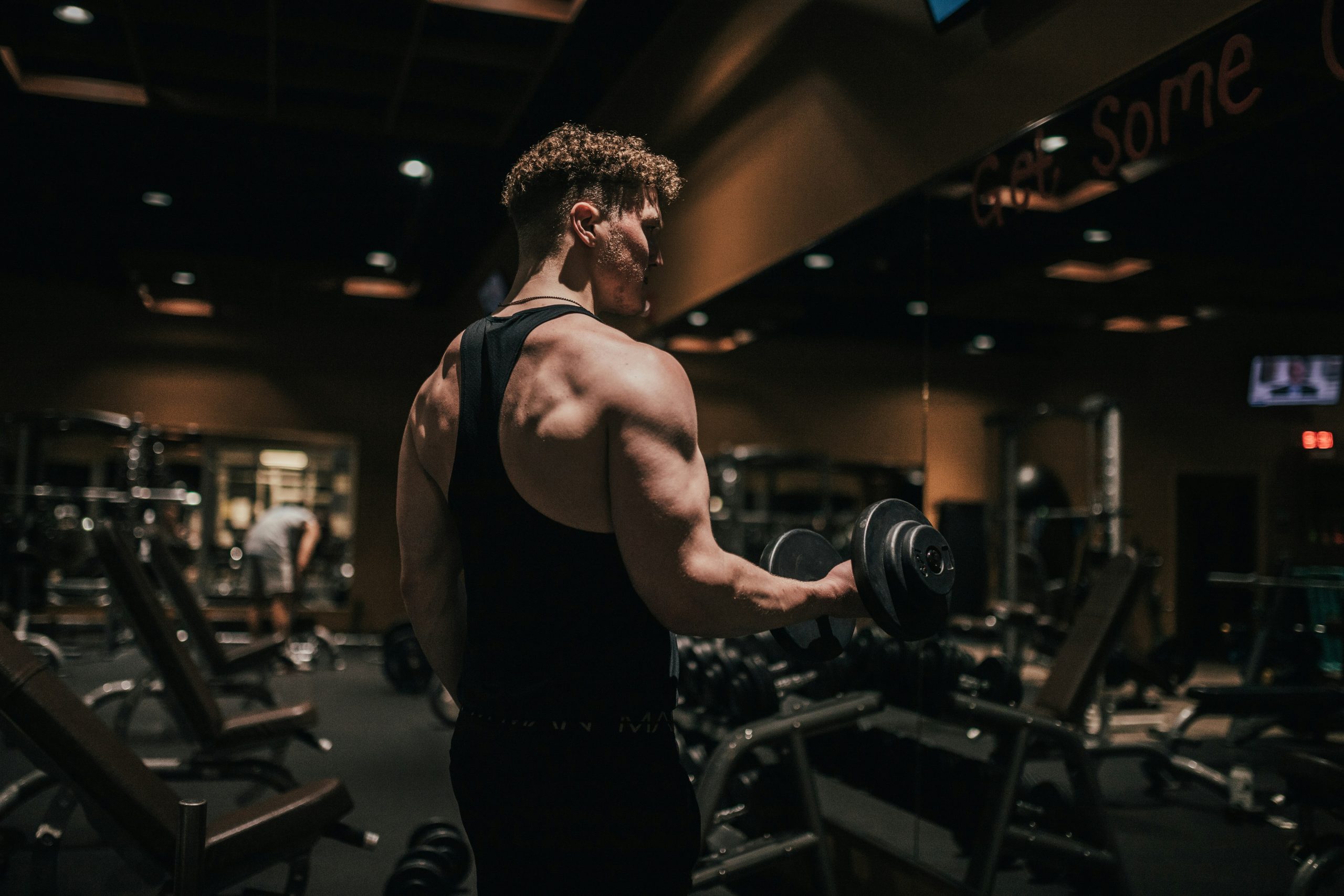
Building muscle does not require spending two or three hours in the gym every day, research consistently shows that muscle growth depends more on training quality, progressive overload, adequate nutrition, and recovery than the total amount of time you spend exercising.
For most people, 30 to 60 minutes of focused resistance training, 3 to 5 times per week, is enough to build significant muscle when paired with proper nutrition and recovery.
Can You Build Muscle Without Long Gym Sessions?
Yes.
Muscle growth (hypertrophy) occurs when your muscles are challenged with enough resistance to stimulate adaptation. Once you’ve completed enough quality training volume, adding extra sets or spending additional hours in the gym often provides diminishing returns.
Instead of aiming for longer workouts, focus on:
- Compound exercises
- Progressive overload
- Proper training intensity
- Sufficient protein intake
- Consistent recovery
Many successful lifters complete effective workouts in under an hour.
Why Shorter Workouts Can Be More Effective
Long workouts often lead to:
- Reduced training intensity
- Mental fatigue
- Poor exercise quality
- Lower motivation
- Longer recovery times
Short, focused workouts help you maintain high energy throughout every exercise, allowing you to lift heavier weights with better form.
Quality almost always beats quantity.
Focus on Compound Exercises
If your goal is building muscle efficiently, prioritize exercises that work multiple muscle groups simultaneously.
Examples include:
| Exercise | Primary Muscles |
|---|---|
| Squats | Quads, glutes, core |
| Deadlifts | Back, hamstrings, glutes |
| Bench Press | Chest, shoulders, triceps |
| Overhead Press | Shoulders, triceps |
| Pull-Ups | Back, biceps |
| Barbell Rows | Back, rear delts, biceps |
These exercises stimulate more muscle fibers than isolation movements and allow you to lift heavier weights.
As a result, you build more muscle in less time.
Use Progressive Overload
What is progressive overload?
Progressive overload means gradually increasing the challenge placed on your muscles over time.
You can do this by:
- Adding weight
- Performing more repetitions
- Increasing total sets
- Improving exercise technique
- Reducing rest periods slightly
- Increasing training frequency when appropriate
Example
Week 1:
- Bench Press: 3 sets × 8 reps at 60 kg
Week 2:
- Bench Press: 3 sets × 9 reps at 60 kg
Week 3:
- Bench Press: 3 sets × 8 reps at 62.5 kg
Small improvements made consistently produce significant muscle gains over time.
Train 3 to 5 Days Per Week
You don’t need daily workouts.
A schedule like this is enough for most people:
Option 1: Three-Day Full Body Split
- Monday – Full Body
- Wednesday – Full Body
- Friday – Full Body
This works especially well for beginners and busy professionals.
Option 2: Four-Day Upper/Lower Split
- Monday – Upper Body
- Tuesday – Lower Body
- Thursday – Upper Body
- Friday – Lower Body
This provides additional training volume without excessively long sessions.
Option 3: Five-Day Push/Pull/Legs
- Monday – Push
- Tuesday – Pull
- Wednesday – Legs
- Friday – Upper
- Saturday – Lower
Each workout can still be completed within an hour.
Keep Workouts Between 30 and 60 Minutes
For most muscle-building workouts:
- Warm-up: 5–10 minutes
- Main lifts: 25–40 minutes
- Accessory exercises: 10–15 minutes
- Cool-down (optional): 5 minutes
If you’re consistently training for over 90 minutes, consider reducing unnecessary exercises.
More time does not automatically mean better results.
Prioritize Training Intensity
Intensity matters far more than workout duration.
Choose weights that challenge you while maintaining proper form.
A good rule is to finish most working sets with 1 to 3 repetitions left in reserve (RIR). This means you could perform one to three more reps before reaching failure.
Training close to failure recruits more muscle fibers while allowing consistent recovery.
Limit Unnecessary Exercises
Many people perform too many exercises for the same muscle group.
For example:
Instead of:
- Bench Press
- Incline Bench
- Decline Bench
- Machine Press
- Cable Press
- Pec Deck
- Push-Ups
Choose:
- Bench Press
- Incline Dumbbell Press
- Cable Fly
Three quality exercises often outperform six mediocre ones.
Rest Just Enough Between Sets
Rest periods affect workout efficiency.
General recommendations:
- Heavy compound lifts: 2–3 minutes
- Isolation exercises: 60–90 seconds
Avoid spending excessive time checking your phone between sets.
Staying focused keeps workouts shorter without sacrificing performance.
Eat Enough Protein
Training stimulates muscle growth, but nutrition supports the rebuilding process.
Aim for approximately:
1.6–2.2 grams of protein per kilogram of body weight per day.
Good protein sources include:
- Chicken breast
- Lean beef
- Fish
- Eggs
- Greek yogurt
- Cottage cheese
- Tofu
- Tempeh
- Beans
- Protein powder
Distributing protein across three to five meals may further support muscle protein synthesis.
Don’t Ignore Calories
Even the best workout program cannot overcome inadequate nutrition.
To maximize muscle growth:
- Eat enough total calories.
- Consume sufficient protein.
- Include healthy fats.
- Prioritize complex carbohydrates for training energy.
If you’re trying to gain muscle, a modest calorie surplus is generally more effective than eating at maintenance.
Recovery Builds Muscle
Muscles grow after training—not during it.
Support recovery by:
- Sleeping 7–9 hours per night
- Managing stress
- Drinking enough water
- Taking at least one or two rest days weekly
Poor recovery limits muscle growth regardless of how hard you train.
Sample 45-Minute Muscle-Building Workout
This full-body workout demonstrates how effective a short session can be.
| Exercise | Sets | Reps |
|---|---|---|
| Squat | 3 | 6–8 |
| Bench Press | 3 | 8–10 |
| Pull-Ups or Lat Pulldown | 3 | 8–10 |
| Romanian Deadlift | 3 | 8–10 |
| Dumbbell Shoulder Press | 2 | 10–12 |
| Plank | 3 | 30–60 seconds |
With efficient rest periods, this workout takes about 45 minutes while training every major muscle group.
Common Mistakes That Waste Time
Avoid these habits:
- Doing too many isolation exercises
- Constantly changing workout programs
- Skipping compound lifts
- Talking between every set
- Spending excessive time on cardio when muscle gain is the goal
- Training to complete exhaustion every session
- Ignoring sleep and nutrition
Consistency with a simple, effective routine beats constantly searching for a “perfect” program.
Frequently Asked Questions
Can you build muscle with 30-minute workouts?
Yes. A well-structured 30-minute resistance workout that emphasizes compound exercises and progressive overload can effectively build muscle, especially for beginners and intermediate lifters.
Is one hour enough to build muscle?
Absolutely. For most people, 45 to 60 minutes is sufficient to complete a productive muscle-building workout with enough volume and intensity.
How many days a week should I train?
Training three to five days per week is ideal for most people looking to build muscle while allowing adequate recovery.
Do longer workouts build more muscle?
Not necessarily. Once you’ve completed enough high-quality training volume, additional workout time often provides minimal extra benefit and may even reduce performance due to fatigue.
Can I build muscle if I have a busy schedule?
Yes. Many people successfully build muscle by completing focused 30- to 60-minute workouts three or four times per week while maintaining proper nutrition and recovery.

Albert Mckennie is a strength and conditioning coach, author, and speaker with experience training athletes and general fitness clients.