


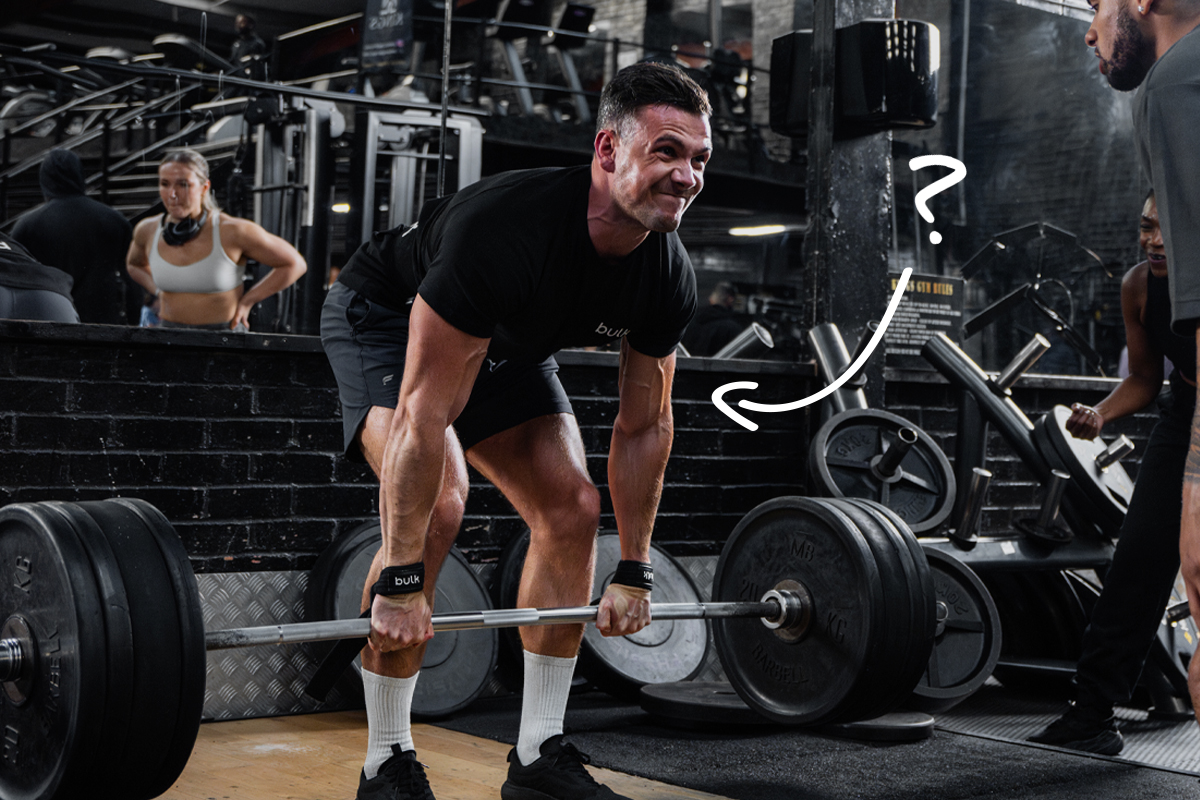

The quality of each repetition determines how effectively you build muscle, by focusing on proper technique, controlled movement, and progressive overload, every rep contributes to better long-term results instead of simply increasing workout volume.
Prioritize Proper Form
Good technique should always come before heavier weights, proper form ensures the intended muscles perform the work while minimizing unnecessary stress on your body.
Key form reminders include:
- Maintain a neutral spine during lifts.
- Keep movements controlled throughout the full range of motion.
- Avoid bouncing or jerking the weight.
- Focus on smooth, consistent movement patterns.
If your form breaks down, reduce the weight until you can complete each repetition correctly.
Use a Full Range of Motion
Performing exercises through their full range of motion helps recruit more muscle fibers and improves flexibility and joint health.
Examples include:
- Squat until your mobility allows proper depth.
- Lower the bar fully during bench presses with control.
- Extend your arms completely during rows and pulldowns.
- Finish pressing movements without locking your joints aggressively.
Partial repetitions have specific uses, but full-range movements should form the foundation of most strength programs.
Control Both the Lift and the Lowering Phase
Many people focus only on lifting the weight while neglecting the lowering phase.
The lowering portion, known as the eccentric phase, plays a major role in muscle development.
A simple rhythm works well for many exercises:
- Lift with controlled power.
- Lower slowly over two to four seconds.
- Pause briefly before beginning the next repetition.
This increases muscle tension without requiring additional weight.
Choose the Right Weight
Using weights that are too light limits progress, while weights that are too heavy often compromise technique.
A good working weight should allow you to:
- Complete all planned repetitions.
- Maintain excellent form.
- Finish each set feeling challenged but still in control.
- Leave one to three repetitions in reserve for most training sessions.
This balance encourages steady strength gains while reducing unnecessary fatigue.
Focus on Progressive Overload
Progressive overload simply means gradually increasing the challenge placed on your muscles.
You can progress by:
- Increasing the weight.
- Performing more repetitions.
- Adding an extra set.
- Improving exercise technique.
- Reducing rest periods when appropriate.
Small improvements over weeks and months lead to significant long-term results.
Avoid Using Momentum
Swinging weights or relying on body movement reduces muscle activation.
For example:
- Avoid swinging during bicep curls.
- Keep your torso stable during rows.
- Control leg drive during upper-body isolation exercises.
- Prevent bouncing out of the bottom of squats.
Your muscles—not momentum—should move the weight.
Keep Your Core Engaged
A strong, braced core creates stability during nearly every strength exercise.
Before lifting:
- Tighten your abdominal muscles.
- Maintain steady breathing.
- Keep your chest lifted.
- Stabilize your torso throughout the movement.
Core stability improves force production and protects your lower back.
Rest Enough Between Sets
Recovery between sets directly affects performance.
General guidelines include:
- 30 to 60 seconds for muscular endurance.
- 60 to 90 seconds for muscle growth.
- 2 to 5 minutes for maximum strength training.
Choosing appropriate rest periods helps maintain workout quality from the first set to the last.
Breathe Correctly
Proper breathing improves stability and performance.
Most lifters benefit from:
- Inhaling during the lowering phase.
- Exhaling while lifting or pushing the weight.
Avoid holding your breath for long periods unless using advanced lifting techniques under proper guidance.
Train the Mind-Muscle Connection
Instead of simply moving the weight, concentrate on the target muscle doing the work.
For example:
- Squeeze your chest during presses.
- Contract your glutes during hip thrusts.
- Focus on your back muscles during rows.
- Feel your quadriceps working during squats.
This increased awareness often leads to better muscle activation.
Don’t Rush Your Workouts
Quality training beats fast training.
Take time to:
- Set up correctly.
- Perform controlled repetitions.
- Rest appropriately.
- Track your progress.
A slower, more deliberate workout usually delivers better results than racing through exercises.
Recover Between Workouts
Muscles grow during recovery—not while lifting.
Support recovery by:
- Sleeping seven to nine hours each night.
- Eating enough protein.
- Staying hydrated.
- Scheduling recovery days.
- Managing overall training volume.
Recovery allows you to perform every future workout at a higher level.
Common Strength Training Mistakes
Watch for these habits that reduce the effectiveness of each repetition:
- Lifting too heavy too soon.
- Cutting repetitions short.
- Ignoring proper warm-ups.
- Skipping compound exercises.
- Training with inconsistent technique.
- Neglecting recovery and nutrition.
Correcting these mistakes can dramatically improve long-term progress.
Frequently Asked Questions
How many reps are best for building strength?
Most strength-focused programs use 1 to 6 repetitions with heavier weights, while muscle-building workouts often use 6 to 12 repetitions. Both can be effective when performed with proper technique and progressive overload.
Is slow lifting better than fast lifting?
Controlled lifting generally improves muscle engagement and technique. Explosive lifting has its place for power training, but it should still be performed with proper form.
Should every set reach failure?
No. Training to complete muscle failure every set isn’t necessary. Leaving one to three repetitions in reserve often supports consistent progress while reducing excessive fatigue.
How often should I strength train?
Most adults benefit from strength training two to four times per week, allowing adequate recovery between sessions for the same muscle groups.