


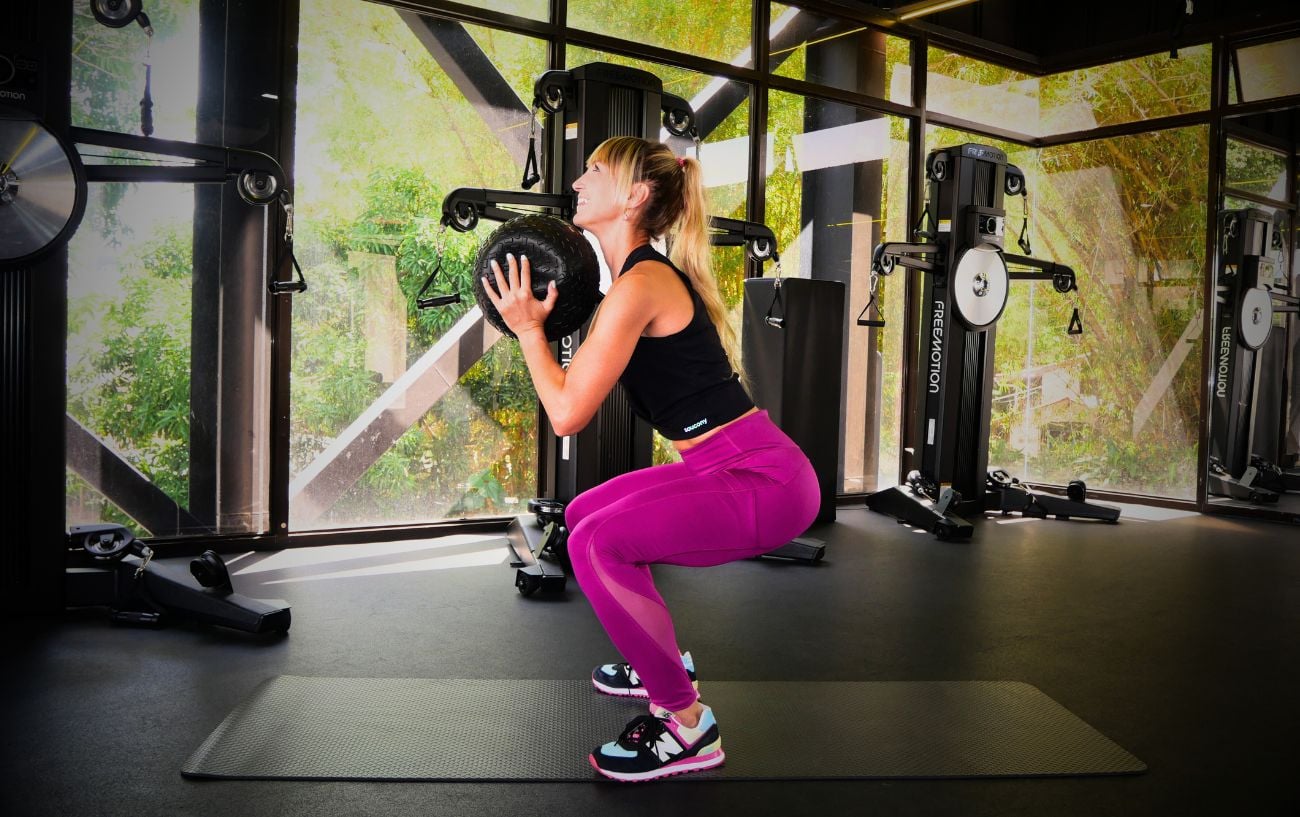
Compound exercises are movements that engage multiple joints, and multiple muscle groups, at the same time, unlike isolation exercises which target a single muscle, these movements recruit the legs, hips, back, chest, shoulders, and arms together, this makes them the most efficient tools for building total-body strength, and for improving coordination, balance, and functional capacity in daily life.
What Defines a Compound Movement
A compound movement involves at least two joints working together, for example the squat involves the hip joint, the knee joint, and the ankle joint, while the bench press involves the shoulder joint and the elbow joint, this multi-joint involvement means more muscle fibers are activated in a single repetition, more calories are burned per session, and more hormonal response is triggered, including increases in testosterone and growth hormone, which support muscle growth and recovery across the entire body.
The Squat
The squat is widely considered the foundation of lower-body strength training, it works the quadriceps, the hamstrings, the glutes, the lower back, and the core, all in one continuous movement, here is a simple illustration of the muscles activated during a barbell back squat.
Muscle Group        Activation Level
Quadriceps          High
Glutes              High
Hamstrings          Moderate
Lower Back          Moderate
Core                Moderate
Calves              Low
Variations include the front squat, the goblet squat, and the split squat, each variation shifts emphasis slightly, but all of them demand stability through the entire torso, and control through the entire range of motion, this makes the squat a central movement for anyone seeking strength that transfers to real-world tasks like lifting, climbing, and carrying.
The Deadlift
The deadlift is often described as the most complete strength movement available, it recruits the glutes, the hamstrings, the lower back, the trapezius, the forearms, and the core, in a single pulling motion, the deadlift also improves grip strength, which is closely linked to overall health and longevity in scientific research.
Muscle Group        Activation Level
Hamstrings          High
Glutes              High
Lower Back          High
Trapezius           Moderate
Forearms            Moderate
Core                High
There are several variations of the deadlift, including the conventional deadlift, the sumo deadlift, and the Romanian deadlift, each variation places different demands on the hips and the hamstrings, but all variations reinforce the hip hinge, which is one of the most important movement skills for injury prevention and athletic performance.
The Bench Press
The bench press is the primary upper-body pushing movement in strength training, it works the chest, the shoulders, and the triceps together, while also requiring stability from the upper back and the core, this movement builds pushing strength that carries over to everyday tasks such as pushing heavy objects, and to athletic movements such as blocking or tackling.
Muscle Group        Activation Level
Chest               High
Shoulders           Moderate
Triceps             High
Upper Back          Low
Core                Low
Variations such as the incline bench press and the dumbbell bench press allow for different angles of muscle activation, and for correction of strength imbalances between the left and right sides of the body, which is important for symmetrical development and injury prevention.
The Overhead Press
The overhead press works the shoulders, the triceps, and the upper chest, while also demanding significant core stability to keep the body upright during the lift, this movement is one of the best indicators of upper-body strength, because it requires control through a long range of motion, and coordination between the shoulders and the core.
Muscle Group        Activation Level
Shoulders           High
Triceps             High
Upper Chest         Moderate
Core                Moderate
Upper Back          Low
The overhead press can be performed with a barbell, with dumbbells, or with kettlebells, each tool offers a different challenge to balance and coordination, dumbbells in particular require each arm to work independently, which helps correct strength differences between the two sides of the body.
The Pull-Up and the Row
The pull-up and the barbell row are the primary pulling movements for the upper body, the pull-up works the latissimus dorsi, the biceps, and the forearms, while also engaging the core to maintain a stable position, the row works similar muscles but allows for heavier loading, and for a different angle of pull.
Muscle Group        Activation Level
Latissimus Dorsi    High
Biceps              Moderate
Forearms            Moderate
Rear Shoulders      Moderate
Core                Low
These pulling movements are essential for balancing the pushing movements described earlier, without adequate pulling strength, the shoulders can become imbalanced, which increases the risk of injury over time, this is why strength coaches recommend an equal ratio of pushing and pulling exercises in any well-designed program.
Programming Compound Exercises for Total-Body Strength
Building total-body strength requires combining these movements into a structured program, one common approach is to organize training around the major movement categories, squat, hinge, push, and pull, ensuring that each category is trained at least once or twice per week.
Day        Focus              Example Exercise
Day 1      Squat and Push     Back Squat, Bench Press
Day 2      Hinge and Pull     Deadlift, Barbell Row
Day 3      Rest or Recovery   Light Walking, Stretching
Day 4      Squat and Pull     Front Squat, Pull-Up
Day 5      Hinge and Push     Romanian Deadlift, Overhead Press
Progressive overload is the principle that drives long-term improvement, this means gradually increasing the weight, the number of repetitions, or the number of sets over time, without progressive overload the body has no reason to adapt, and strength gains will plateau quickly, regardless of how well the exercises are chosen.
Recovery and Support for Strength Development
Recovery plays a central role in strength development, muscle tissue repairs and grows stronger during rest periods, not during the workout itself, adequate sleep, proper hydration, and sufficient protein intake all support this repair process, without these elements even the best exercise selection will produce limited results.
Nutrition should include enough protein to support muscle repair, generally between one point six and two point two grams per kilogram of body weight per day, according to research published in sports nutrition journals, carbohydrates should also be included to replenish energy stores, particularly around training sessions, when the body’s demand for fuel is highest.
Long-Term Benefits of Compound Training
Total-body strength built through compound exercises extends beyond the gym, stronger muscles support better posture, reduced risk of falls in older adults, and improved performance in daily activities such as carrying groceries, climbing stairs, and lifting children, research from exercise science institutions consistently shows that individuals who train with compound movements experience greater improvements in functional capacity compared to those who rely solely on isolation exercises.
The squat, the deadlift, the bench press, the overhead press, and the pull-up together form a complete system for developing strength across the entire body, when combined into a structured program, supported by adequate recovery and nutrition, these movements provide the most efficient and effective path toward total-body strength for individuals at any training level.

Albert Mckennie is a strength and conditioning coach, author, and speaker with experience training athletes and general fitness clients.