


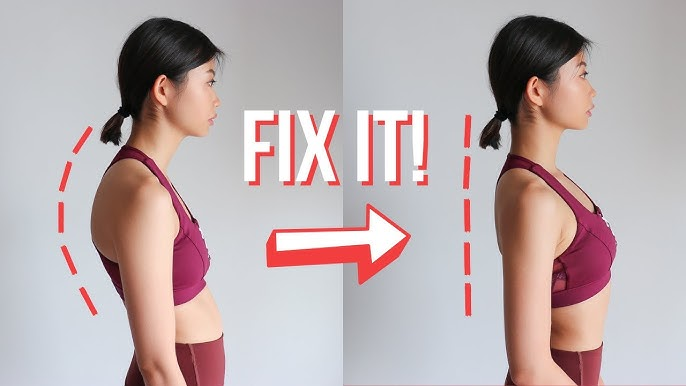

Posture reflects the alignment of the spine, shoulders, hips, and head, and it depends on the balance between opposing muscle groups, when certain muscles become weak or overly tight, the body compensates by shifting into rounded shoulders, forward head position, or an exaggerated curve in the lower back, this pattern develops gradually through prolonged sitting, repetitive movement, or lack of targeted strength work, correcting it requires a combination of strengthening exercises for the back and core, along with stretching for the chest and hip flexors.
Chin Tucks
Chin tucks strengthen the deep neck flexors and reduce the forward head position that develops from screen use, the exercise is performed by sitting or standing tall, then gently drawing the chin straight back as if creating a double chin, holding the position for a few seconds before releasing, repeating this ten to fifteen times trains the muscles responsible for holding the head in a neutral position over the shoulders.
Wall Angels
Wall angels target the muscles around the shoulder blades and improve the mobility needed for an upright chest position, the exercise begins by standing with the back, head, and arms against a wall, the arms are then raised and lowered in a slow motion similar to making a snow angel while maintaining contact with the wall, this movement trains the shoulder blades to move correctly while strengthening the muscles that hold them in place.
Scapular Retraction
Scapular retraction directly strengthens the rhomboids and middle trapezius, which are often underactive in people with rounded shoulders, the exercise can be performed using a resistance band held at chest level, pulling the band apart by squeezing the shoulder blades together, holding briefly before returning to the starting position, repeating for ten to twelve repetitions builds the strength needed to keep the shoulders pulled back throughout the day.
Bird Dog
Bird dog builds stability through the core and lower back while training the body to maintain a neutral spine during movement, the exercise starts on the hands and knees, then one arm and the opposite leg extend simultaneously while the spine remains still, holding for a few seconds before switching sides, this exercise is valuable because it teaches control of the trunk in a way that carries over to standing posture.
Glute Bridges
Glute bridges strengthen the glutes and support proper pelvic alignment, which reduces strain on the lower back, the exercise is performed lying on the back with knees bent and feet flat on the floor, then lifting the hips toward the ceiling while squeezing the glutes, holding briefly at the top before lowering slowly, this movement is especially useful for people who sit for long periods, since prolonged sitting weakens the glutes and shortens the hip flexors.
Planks
Planks train the entire core, including the abdominal muscles and the muscles along the spine, which together support an upright trunk, the exercise is performed by holding the body in a straight line from head to heels, supported on the forearms and toes, while keeping the abdominal muscles engaged, building endurance in this position transfers directly to the ability to sit and stand with a stable trunk.
Cat-Cow Stretch
Cat-cow improves mobility through the spine and helps release tension that builds up from staying in one position for long periods, the exercise is performed on the hands and knees, alternating between arching the back upward while tucking the chin, then dropping the belly downward while lifting the chest and head, moving slowly between these positions restores movement through each section of the spine.
Thoracic Extension
Thoracic extension targets the mid back, which often becomes stiff and rounded from sitting, the exercise can be performed using a foam roller placed under the shoulder blades while lying on the floor, gently arching backward over the roller to extend the upper spine, this movement counteracts the forward curve that develops in the upper back and supports a more upright chest position.
Face Pulls
Face pulls strengthen the rear shoulder muscles and upper back, which help draw the shoulders into proper alignment, the exercise is performed using a resistance band or cable at face level, pulling the band toward the face while separating the hands and squeezing the shoulder blades together, this exercise is particularly useful for counteracting the effects of pressing movements and desk work that pull the shoulders forward.
Hip Flexor Stretch
Tight hip flexors from prolonged sitting pull the pelvis forward and increase the curve in the lower back, the stretch is performed in a kneeling lunge position, with the back knee on the floor and the front knee bent at a right angle, then shifting the hips forward while keeping the torso upright, holding this position for thirty seconds on each side gradually restores length to these muscles and reduces strain on the lower back.
Chest Stretch
A tight chest pulls the shoulders forward and contributes to a rounded upper back, the stretch can be performed by standing in a doorway with the forearms placed against the frame, then leaning forward gently until a stretch is felt across the chest, holding for thirty seconds allows the chest muscles to lengthen and supports the ability to hold the shoulders back.
Building a Weekly Routine
A posture-focused routine benefits from combining strengthening and stretching exercises several times per week, a practical approach includes chin tucks, wall angels, and scapular retraction daily, since these directly address the neck and shoulder alignment, bird dog, glute bridges, and planks three to four times per week to build core and hip strength, and cat-cow, thoracic extension, hip flexor stretches, and chest stretches performed daily or after long periods of sitting, consistency across weeks produces gradual improvement in alignment, since posture changes develop over time rather than through a single session.
Improving posture relies on consistent practice of exercises that strengthen weak muscles while stretching those that have become tight, the combination of neck, shoulder, back, and hip work addresses the full range of muscles responsible for alignment, and applying these exercises regularly over weeks produces measurable improvement in how the body holds itself throughout daily activity.